As part of Etsy’s ongoing commitment to enhancing security and trust in its online marketplace, several major policy updates have been introduced over the years. These changes aim to streamline operations, improve platform integrity, and more effectively support Etsy sellers. Here’s a detailed overview of the recent significant Etsy policy updates.
Last updated: February 2026
Etsy Policy Updates
Over the years, Etsy has introduced a range of policy updates focused on enhancing safety, improving platform functionality, and enriching the overall user experience for both shoppers and sellers. Notably, the quieter summer months often bring significant new features and policy changes that can drastically impact how customers interact with listings.
For sellers who stay well-informed and adapt quickly, these updates offer a great opportunity to refine their strategies in preparation for the busy holiday season. This guide provides a thorough overview of Etsy’s major policy changes throughout the year.
Be sure to bookmark this page and check back regularly for the latest information and updates to stay ahead in your Etsy business.
Recent Etsy Policy Updates
- CEO Leadership Transition
- Creativity Standards Overhaul
- Services Policy Updates
- US Tariff & De Minimis Changes
- ChatGPT Instant Checkout
- Marketplace Insights Tool
- AI Seller Tools
- Policy Violations & Listing Appeals
- Payments Policy Update
- Listing Title Guidance
- Etsy Sells Reverb
- Etsy User Privacy Updates
- New Etsy Shop Onboarding
- Etsy Gift Mode
- New Gift Teasers for Gift Recipients
- Etsy ‘Made for You’
- Etsy Share & Save
- Inactive Shops Policy
- Enhanced Estimated Delivery Dates
- Trust & Safety Updates
- Custom Holiday Processing Schedule
- Updates to Prohibited Item Policy
- Updated Listing Form
- New Creativity Standards
- Etsy Insider Loyalty Program
- Etsy Customer Service Standards
→ Stay in the know with future Etsy policy updates when you subscribe to our newsletter.
CEO Leadership Transition (Oct 2025 → Jan 2026)
What happened: Josh Silverman stepped down as Etsy CEO effective December 31, 2025 after 8+ years. Kruti Patel Goyal (former CEO of Depop and Etsy’s President/Chief Growth Officer) took over as CEO on January 1, 2026. Silverman is serving as Executive Chair through the end of 2026. Board Chair Fred Wilson also stepped down from the chairmanship but remains on the board.

Why it matters to sellers: New leadership signals strategic shifts. Goyal’s background running Depop (resale, Gen Z, mobile-first) suggests Etsy will lean harder into mobile shopping, AI personalization, and global growth. Sellers who understand the new CEO’s priorities can align their strategies early.
→Key data points
- Etsy marketplace GMS was down 2.4% YoY in Q3 2025
- Active buyers had slipped to ~86.6 million
- 46% of marketplace GMS now comes through the Etsy app (highest ever)
- Q3 2025 revenue beat analyst expectations at $678M despite GMS decline
Creativity Standards Overhaul (June 2025)
What happened: Etsy made an unannounced update to its Creativity Standards, the rules governing what can be sold on the platform. Major changes include:
- Computerized tools now require original designs. Items made with laser printers, 3D printers, CNC machines, Cricut machines, etc. must use the seller’s own original design—not purchased templates from other creators. This is a direct crackdown on template-based sellers.
- Digital vintage scans removed. Etsy quietly removed the language allowing sellers to sell “digital files of scanned vintage content like photographs, books, or patterns.” These listings may now violate policy.
- Nature items crackdown. Etsy added language prohibiting reselling commercially purchased natural items (rocks, gemstones, seashells from Amazon/Lowe’s) that sellers haven’t used to create something new.
- Sourced items can now use commercial images. Sellers of “Sourced by a Seller” items gained flexibility to use manufacturer/distributor photos for their listings.
- Spell work supplies restricted. Items related to spell work (herbs, crystals, spell books) may only be sold if they qualify under another category (e.g., a vintage spell book, a handpicked crystal from nature). Resold commercial spell work items no longer qualify as “Seller Sourced” craft supplies.
→Why it matters to sellers
This is the biggest product compliance change since the original Creativity Standards rollout. Thousands of shops using purchased Cricut/3D printer templates are now potentially in violation. Sellers who don’t audit their listings risk takedowns.
Etsy Services Policy Updates (June 2025)
What happened: Alongside the Creativity Standards, Etsy updated its Services Policies:
- Modification Services now allowed. Etsy now explicitly permits listings for modification services—an umbrella term covering various service-type listings that were previously in a gray area.
- Explicitly prohibited services: Personal therapy, tutoring, training, coaching, and similar services are now clearly banned. Listings created solely for the purpose of transferring money are also explicitly prohibited.

→Why it matters to sellers
Sellers offering services on Etsy need to verify their listings fall within the newly clarified boundaries. The modification services allowance opens new opportunities, but the coaching/tutoring ban closes others.
US Tariff Overhaul and De Minimis Rule Elimination (Feb–Aug 2025)
What happened: A series of tariff changes fundamentally altered the cost structure for Etsy sellers who import materials:
- Feb 1, 2025: Executive orders imposed tariffs on imports from China, Mexico, and Canada, suspending the $800 de minimis exemption for those countries.
- Feb 7, 2025: De minimis suspension paused to give Customs time to prepare.
- April 2, 2025: Executive order permanently closed the de minimis loophole for China/Hong Kong effective May 2, with tariffs on Chinese goods reaching up to 120-125%.
- July 30, 2025: Executive order abolished the $800 de minimis exemption for ALL countries, effective August 29, 2025.
- Post-Aug 29: Every parcel shipped to the US must now clear customs and pay duty. Ad-valorem duty bands of 10-50% replace the earlier flat surcharges, varying by origin country and product category.
→Why it matters to sellers
A $400 packaging order from China now costs ~$880+ after tariffs. Sterling silver components costing $600/month now require ~$1,320. Sellers importing any raw materials—specialty fabrics, jewelry findings, packaging, craft supplies—face massive margin compression. Domestic sourcing and supply chain diversification are no longer optional strategy conversations; they’re survival tactics.
→Etsy’s response
Etsy published a Seller Handbook article (“Navigating Evolving Global Tariff Policies,” updated Jan 16, 2026) directing sellers to official government resources. They have not offered fee relief or tariff-specific tools.
ChatGPT Instant Checkout Integration (Sept 2025)
What happened: OpenAI launched Instant Checkout in ChatGPT, with Etsy as the first commerce partner. US ChatGPT users (Plus, Pro, and Free) can now discover and purchase Etsy products directly inside ChatGPT conversations without ever visiting Etsy’s website.
→ Key details:
- Powered by OpenAI’s Agentic Commerce Protocol, co-built with Stripe
- Product results are organic and unsponsored—ranked purely on relevance
- Only sellers enrolled in Etsy’s Offsite Ads program have their listings eligible for Instant Checkout
- Merchants pay a small fee on completed purchases
- Etsy stock jumped 16% on the announcement
- ChatGPT has 700M+ weekly active users; “a huge portion” of queries are shopping-related
- Currently limited to single-item US purchases; multi-item carts and international expansion planned
→Why it matters to sellers
This is a new discovery and sales channel that most sellers don’t even know exists. Sellers need to think about how their titles, descriptions, and product information read when an AI is parsing them—not just how they look on Etsy’s search page. This is the beginning of GEO (Generative Engine Optimization) for Etsy sellers.
Marketplace Insights Tool Launch (Sept 2025)
What happened: Etsy launched its own keyword research tool, Marketplace Insights, built into Shop Manager under the Stats tab. It’s useful. But it’s also what every other seller on the platform now has access to—for free.
→Why it matters to sellers
The marketplace tool is useful, but it has its limitations. It’s a 30-day window with 15 free searches per week, and there are open questions about whether it includes app traffic—which now accounts for 46% of all Etsy sales. It shows you search volume and listing counts, but listing count alone doesn’t tell you whether those 50,000 competing listings are strong or weak, established or vulnerable.

→Want better insights?
Marmalead goes further. It measures keyword engagement—not just how many people search a term, but how likely those searches are to turn into clicks, favorites, and purchases. It shows you how competition quality stacks up, not just quantity. And it gives you trend data beyond a single month, so you can plan inventory and optimize listings ahead of demand instead of chasing it. And it comes with Marma AI, your own personal Etsy expert assistant.
Think of Marketplace Insights as your starting point, great for spotting what’s moving right now. Then run those keywords through Marmalead to find out which ones are actually worth your time.
AI-Powered Seller Tools Suite (Sept 2025)
What happened: Etsy rolled out several AI-powered tools for sellers:
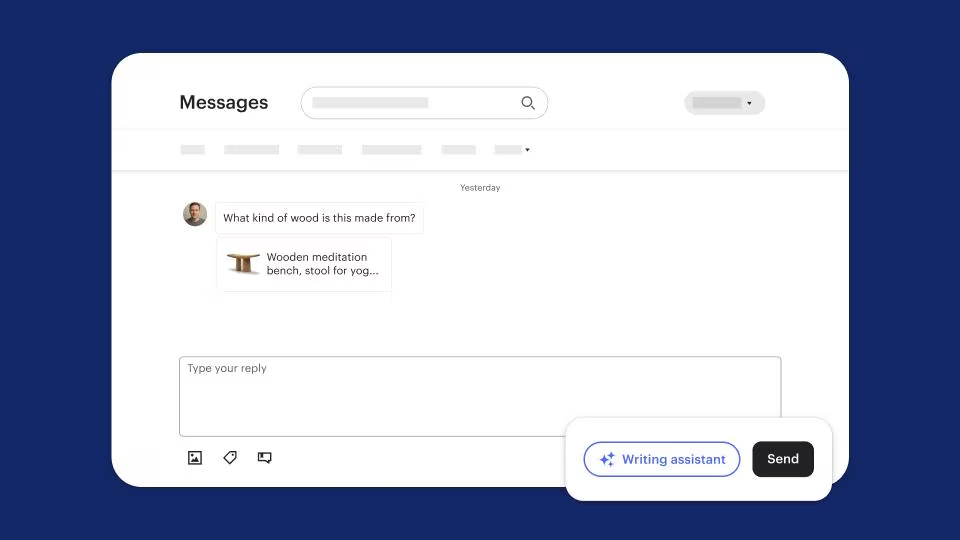
- Writing Assistant: Drafts personalized responses to buyer messages based on your shop’s details. Currently available to English-speaking US sellers, with expansion planned.
- Listing Title Suggestions + Bulk Editing: AI recommends “buyer-friendly” titles optimized for search. Eligible listings appear in the Search Visibility dashboard for bulk editing with real-time feedback.
- Attribute Suggestions: Helps sellers add missing product details from the Search Visibility dashboard (currently available for Wall Hangings and Prints categories).
- AI-Generated Review Summaries: Buyer-facing feature that surfaces recurring themes from reviews (e.g., “fast shipping,” “well made”)—similar to Amazon’s review snippets.
→Why it matters to sellers
Etsy is making it clear that AI is now part of the seller experience. The Writing Assistant stat is telling: sellers who respond to buyer messages within two days have a 27% higher conversion rate. The title suggestions tool directly impacts SEO—sellers who blindly accept AI suggestions without understanding keyword strategy could hurt their visibility.
Policy Violations Page + Listing Appeals (Sept–Oct 2025)
What happened: Etsy launched two major trust and enforcement tools:
- Policy Violations Page: A new page in Shop Manager that centralizes all listing takedown information. Sellers can see which listings have been removed and which policy was cited. Previously, sellers relied on email notifications (which sometimes didn’t arrive) and had no centralized record.
- Listing Appeals (gradual rollout): For the first time in years, Etsy is offering a formal appeals process for removed listings. Initially limited to listings removed under the Creativity Standards policy. Some sellers reported the appeals process working as of October 2025.

→Why it matters to sellers
This addresses one of the most painful seller experiences on Etsy—having listings removed by bots with no clear recourse. It’s not perfect (appeals are currently limited to Creativity Standards only, and many erroneous takedowns happen under other policies like Prohibited Items), but it’s a significant step. The head of Trust & Safety acknowledged the problem in May 2025.
Etsy Payments Policy Update (Dec 2025)
What happened: Several updates to Etsy’s Payments Policy:
- Expanded global scope: The “Appointment of Etsy as Collection Agent” provision, which previously applied only to US, EU, and UK sellers, now applies to ALL sellers worldwide.
- Third-party verification: Etsy added third-party service providers to the list of entities authorized to verify sellers’ personal information.
- Instant Transfers (US only): Eligible US sellers can now transfer funds from their Etsy Payment account directly to their bank, typically settling within 30 minutes. Available 24/7 including weekends and holidays. Comes with a fee displayed during the transfer process.
- Location accuracy requirement: Sellers are now explicitly responsible for keeping location information accurate and current.
- Tax on fees: New language addressing states (like Texas and Washington) that have begun taxing digital data processing services—meaning sellers in those states may see fees subject to additional taxes.
→Why it matters to sellers
The Instant Transfers feature is genuinely useful for cash-flow-constrained small businesses. The expanded verification scope and location requirements reflect Etsy’s continuing push to comply with global regulations. The tax-on-fees issue caught many sellers off-guard—Etsy made these changes without proactive announcements.
Updated Listing Title Guidance (Sept 2025)
What happened: Etsy published updated guidance on effective listing titles and introduced a tool to help sellers write titles that are both buyer-friendly and search-optimized.

→Why it matters to sellers
Title optimization is the single highest-leverage SEO action a seller can take. Etsy’s guidance signals what the algorithm is rewarding—clarity and specificity over keyword stuffing.
Etsy Sold Reverb (June 2025)
What happened: Etsy sold its music gear marketplace Reverb, continuing the unwinding of its “house of brands” strategy under Silverman. This followed the earlier sale of Elo7 (the Brazilian marketplace). Etsy is now focused on its core marketplace and Depop.

→Why it matters to sellers
Signals that Etsy’s leadership is consolidating resources around its core marketplace and Depop, rather than spreading across multiple verticals.
Etsy User Privacy Updates
These two Etsy policy updates are aimed at enhancing user privacy and security for buyers and sellers.

Enhanced Forum Privacy
Users must now be signed in to view most posts in the Etsy Forums, enhancing the security and exclusivity of community interactions. Previously, Etsy’s online forums weren’t locked behind a login, so anyone online could browse through chat rooms and view discussions—most of which were typically between sellers.
This change is intended to create a more secure and tailored experience for Etsy sellers, fostering a comfortable space for sharing and support. Only the Announcements and Technical Issues sections remain publicly visible.
API Data Restrictions
Etsy now limits the buyer information that third-party integrations can access through their API, focusing on protecting shopper privacy. Sellers using tools that rely on buyer email addresses have been informed of this change and guided on how to comply.
This policy update does not result in Etsy removing any third-party integrations. The change is specifically about limiting access to buyer email addresses, not discontinuing partnerships with these third parties.
Etsy sellers using third-party integrations to build their own email lists are encouraged to obtain buyers’ consent (“opting in”). Etsy advises against adding customer emails to mailing lists without consent, as it violates Etsy policies and potentially applicable laws. Sellers can continue using Etsy’s tools, such as customizing messages to buyers and using targeted offers, to maintain customer communication.
→ Impact on Sellers
These changes are intended to create a more secure and tailored experience for Etsy sellers and better protect user data from potential misuse—fostering a comfortable space for sharing and support.
New Etsy Shop Onboarding
Etsy tightened restrictions on how sellers create new shops to combat fly-by-night shops, scammers, and low-effort sellers.

Enhanced Identity Verification
Etsy now requires new sellers to complete a photo ID and selfie verification during the new shop set-up process. This verification step is done in partnership with Persona, a third-party company specializing in secure identity verification.
New sellers must upload a photo ID, such as a driver’s license or passport, and take a selfie to confirm their identity. This process ensures that new shop owners are legitimate sellers—an extra step designed to enhance trust and safety across the platform.
New Etsy Shop Set-Up Fee
Etsy has introduced a one-time $15 set-up fee for new shops. This fee supports enhanced security measures and ensures that new sellers are committed to running a serious business on Etsy.
The fee helps fund better security features and support systems for new sellers, contributing to a safer and more reliable marketplace.
Delayed Payouts for New Etsy Shops
Etsy is implementing changes to the payment schedules for new shops to enhance trust and accountability. New sellers will experience delayed payouts until they establish a proven track record of fulfilling orders. This delay ensures that new sellers are committed to providing quality service and can handle refunds if necessary.
These changes do not affect existing shops with established histories, but new shops must demonstrate reliability before gaining immediate access to their funds.
→ Impact on Sellers
These updated policies for onboarding new shops ensure that only serious, verified sellers join Etsy, enhancing overall platform trust and security.
Etsy Gift Mode
Etsy’s new shopping experience, Gift Mode, uses AI and expert curation to help shoppers find the perfect gifts based on recipient personas and preferences. This feature is part of a major marketing campaign aimed at making Etsy synonymous with thoughtful gifting.

A New Way to Shop for Gifts on Etsy
Gift Mode allows shoppers to browse through 200 pre-set personas in an attempt to select a profile that closely matches the interests and personality of the person they’re shopping for. Each persona includes a curated list of products tailored to interest the gift receiver.
Shoppers can even take a gifting quiz where they select the relationship to the recipient (like sister, friend, etc.), the occasion (like a birthday), and the recipient’s interests (such as food, home decor, astrology). This helps Gift Mode hone in on the gifts the recipient might like, creating a streamlined shopping experience.
Gift Mode utilizes AI machine-learning technology and curation by Etsy’s team of style experts to suggest appropriate gifts. This technology works similarly to how Etsy search works—taking into account factors like category relevance, tags, and listing quality.
If Etsy sellers want their products featured in Gift Mode, they’ll need to optimize their listing according to Etsy’s best practices. That means focusing on high-quality photography, using Etsy tags that sell, and improving their Etsy SEO.
→ Impact on Sellers
Gift Mode aims to enhance the shopping experience by reducing the stress of gift selection. This could potentially increase sales for well-optimized listings during gift-giving occasions.
New Gift Teasers for Gift Recipients
Etsy introduced gift teasers for gift recipients, allowing buyers to send digital gift previews to their friends and loved ones.
Messages from Gift Recipients
In a surprising update, those receiving a gift teaser can now message sellers. This is intended to make it easier to provide support for gift recipients. However, sellers may now need to respond to two customers for every sale.
With this Etsy policy update, it could get confusing who your customer is. However, at the end of the day, the purchaser is the one who paid you. So they’re the customer. They can request a refund, return, or exchange according to your shop’s policies. They also control the review process, meaning they’re the ones who can leave a review and rate their experience with your shop.
While not directly involved in the purchase or decision to purchase your product, the gift recipient will be the end user. So, you’re essentially making it for them.
With Etsy’s new messaging feature for gift teasers, recipients can now directly interact with sellers regarding questions about the product or issues related to shipping. However, they can’t leave a review or request a refund unless they have their own Etsy account and buy something from you in the future.
→ Impact on Sellers
Ultimately, while the buyer holds more transactional power, both the buyer and the recipient are important to your business. A thoughtful approach to customer service can help you manage both groups and maintain a positive reputation on Etsy.
Etsy ‘Made For You’
Etsy’s new ‘Made For You’ page is a personalized shopping hub offering buyers a simplified browsing experience.

A Curated Shopping Experience
The ‘Made For You’ page is a marketing tool on Etsy designed to enhance the shopping experience by presenting buyers with personalized product suggestions, deals, and features.
Some of the features included on the ‘Made For You’ page include:
- Gift Mode: for finding the perfect present.
- Deals Tabs: to navigate the best savings.
- Etsy’s Picks: which highlights quality listings.
→ Impact on Sellers
‘Made For You’ aims to be a one-stop shop that funnels shoppers into using specific features to help them find products based on their past behaviors and interactions on the Etsy marketplace. Sellers should note which features are promoted on this page and optimize their listings accordingly.
Etsy Share & Save

Incentive Program
Etsy’s Share & Save program rewards sellers with a 4% discount on their Etsy bill for orders placed through unique links shared outside Etsy. This encourages sellers to drive their own traffic to the platform.
For example, a seller promoting their shop on Instagram can use a Share & Save link, and any purchases made through that link will earn them a 4% fee discount.
→ Impact on Sellers
Share & Save helps sellers reduce their costs and encourages proactive marketing efforts, potentially increasing their overall sales.
Inactive Shops Policy
Closing Inactive Shops
Etsy began notifying shops that have been inactive for four or more years about potential closure. After a 90-day notice, shops that are still inactive will be closed permanently.
→ Impact on Sellers
This policy helps maintain an active, vibrant marketplace and protects user data by closing dormant accounts. If sellers abandon their accounts for four years, they run the risk of permanent deletion.
Enhanced Estimated Delivery Dates
Etsy now uses historical shipping data and carrier information to estimate delivery dates for US domestic orders accurately.

New Calculation for Delivery Estimates
Customers rate delivery times as one of the most important decisions that go into why they choose to purchase from an Etsy shop. In fact, Etsy shoppers are more likely to buy items that ship faster—even if it’s only by one day.
Since customers can’t always rely on the seller’s advertised processing times, Etsy now has its own calculation.
They’re still using the processing times and shipping methods sellers provide, but now they’re also examining how fast sellers actually ship and what the carriers say about transit times.
If you live in an area where transit times take longer than other parts of the US, Etsy’s new estimates will show that more clearly to customers. More importantly, if you’ve been slow on shipping before, that may affect your future shipping estimates. Being known for slow shipping could not only mess with your reviews and how customers see you, but it might also stop your shop from showing up under quick shipping options.
→ Impact on Sellers
If Etsy knows your deliveries consistently arrive late, they could start to ding your account and estimate longer shipping times for future customers.
Trust & Safety Updates
Etsy’s Transparency Report reveals that the number of listings removed for violating any policy has doubled, and the removal of listings that breach the Handmade Policy has quadrupled.
Although their automated systems might miss some listings, paired with human oversight, Etsy’s Trust & Safety team is beginning to more accurately identify and remove non-compliant listings.
→ Impact on Sellers
By upping its trust and safety efforts, Etsy ensures that sellers can focus more on managing their day-to-day operations and connecting with buyers rather than dealing with security concerns. These measures ensure a safer and more authentic marketplace, preserving Etsy’s reputation for unique, handmade goods.
Custom Holiday Processing Schedule
Sellers in the US and Canada can now specify which national postal holidays they process orders on, allowing for more accurate ship-by dates.

Accurate Processing Schedules
This feature helps sellers manage buyer expectations and ensures accurate delivery timelines. It ensures that your ship-by dates are adjusted to the next available business day, excluding days when post offices are typically closed (like Sundays and federal holidays).
→ Impact on Sellers
This flexibility allows you to better manage your shop during busier times and plan for days off without impacting customer expectations or your shop’s performance. Whether you take breaks during the holidays or you work straight through, you can now set your schedule to fit your lifestyle.
Updates to Prohibited Item Policy
Etsy has updated its prohibited items policy to include stricter rules on certain products. High-powered magnets, weapons, and items that promote hate or violence are now more strictly regulated.
Stricter Product Guidelines
Specific examples of prohibited items include loose magnets that exceed the approved flux rating, firearms, knives intended to inflict harm, and any content promoting hate groups. To maintain a safe and trustworthy marketplace, sellers must ensure their products comply with these new guidelines.
→ Impact on Sellers
Certain items will no longer be allowed for sale on Etsy, while others must be excluded from the primary listing photo.
Updated Listing Form
Etsy retired its old listing form to make way for a more streamlined approach that asks sellers to answer a series of questions related to their product. This new listing form includes various questions pertaining to Etsy’s new Creativity Standards.

Etsy’s New Listing Form
The new listing form features navigation tabs, a performance tab, a listing preview, and a profit calculator, making it easier for sellers to create and manage listings.
Some of the questions on the new listing form include:
How does your shop produce this item?
- It’s made from scratch: My shop makes this item using only raw or basic craft materials, such as fabric, clay, resin, glass, etc.
- It’s assembled from purchased parts: My shop assembles this item using some commercially available supplies, components, or parts, such as jewelry charms, patches, etc.
- It’s an item that my shop alters: My shop alters or customizes a commercially available base item, such as a t-shirt or mug.
- It’s a curated set of purchased good: My shop curates a themed assortment that includes some commercially available goods.
- It’s a natural material: My shop finds or cultivates this item from nature.
What tools are used to make this item?
- Handheld or hand-guided tools: Sewing needles, paintbrush, sewing machine, table saw, etc.
- Computerized tools or machines: Laser printer, computerized embroidery machine, Cricut machine, CNC machine, 3D printer, etc.
- An AI generator: Midjourney, DALL-E, Canva AI, Chat-GPT, etc.
- None: I don’t use tools
→ Impact on Sellers
Responses to these questions will change how buyers see your products in the future, which Etsy hopes will improve the shopping experience on the marketplace.
Etsy’s New Creativity Standards
Etsy’s new Creativity Standards categorize products based on the seller’s involvement in their creation process.
Here’s the breakdown:
- Made by a Seller: Products entirely crafted by the seller.
- Designed by a Seller: Items designed by the seller but produced using an external manufacturing process, such as Print on Demand.
- Sourced by a Seller: Supplies and materials sourced by the seller for crafting and creation, including DIY kits and gift/mystery boxes.
- Handpicked by a Seller: Vintage and unique items curated by the seller.
→ Impact on Sellers
These categories aim to provide buyers with transparency about products’ origins and crafting processes. Sellers must use Etsy’s new listing form to reflect these new designations, enhancing buyer trust and ensuring compliance with Etsy’s standards.

Etsy Insider Loyalty Program
Shoppers who enroll in the Etsy Insider loyalty program can look forward to receiving perks aimed at improving their shopping experience on Etsy.
Here are some of the advantages that members can anticipate:
Complimentary Shipping
Members will receive free shipping within the U.S., encouraging them to shop from various sellers without being concerned about additional shipping expenses.
Discounts
Access to discounts unavailable to regular shoppers could be a significant attraction, enabling members to save on unique discoveries across the Etsy’s marketplace.
Birthday Surprises
Etsy Insider members will receive birthday surprises, adding a personal touch to their membership journey.
Exclusive Merchandise
The program offers access to limited edition merchandise developed in collaboration with Etsy sellers, introducing an element of exclusivity and collectability to membership benefits.
Get a Sneak Peek at New Products
Members get an exclusive look at products or limited releases, allowing them to snag unique items before the general public can.
→ Impact on Sellers
These perks are all part of Etsy’s plan to boost buyer interaction and loyalty. Anything to make it easier to discover high-quality items amidst concerns over the “junkification” of Etsy.
Etsy Customer Service Standards
Etsy’s customer service standards sets a minimum requirement for sellers for increased visibility in search results. This policy and dashboard gives sellers customer service goals to shoot for and an easy way to track them.

Here are the minimum requirements:
- Reply to at least 80% of customer messages within 48 hours (first message only).
- Ship at least 80% of your orders on time.
- Have no more than four reviews with a rating of 3-stars or lower.
- Have no more than three orders with a case that Etsy has refunded from your account.
→ Impact on Sellers
By meeting or exceeding these standards, you not only improve your chances of higher search visibility but also have the opportunity to earn a Star Seller badge. If you can’t meet these requirements, you’ll likely see less traffic from Etsy search as a result.
Over to you
Navigating Etsy’s policy updates can feel overwhelming, but staying informed and adapting quickly can significantly benefit your small business.
These changes aim to enhance security, streamline processes, and improve the overall experience for both sellers and buyers. From shop onboarding to Gift Mode, Etsy continues to evolve its platform to foster a safe and effective marketplace.
Stay ahead of the curve by regularly checking for updates and adapting your strategies accordingly.
Bookmark this guide and subscribe to our newsletter to stay up-to-date with the latest Etsy policy changes and tips for making the most of your Etsy shop. By staying informed and proactive, you can turn these updates into growth opportunities and improve your Etsy shop performance.
Did we miss any major Etsy policy updates? Let us know down in the comments below!
And as always, happy selling!